

0 грн.
Checkout
Coniferous plants have long become a decoration of Ukrainian gardens — thujas, junipers, spruces and pines keep their shape all year round, do not shed needles in autumn, and look well-groomed even in winter. But the beauty of a coniferous composition is fully revealed only when it is properly "framed" by a lawn. Poorly chosen grass next to conifers can harm both the plants and the lawn itself. We tell you how to make this combination harmonious and durable.
Coniferous plants create specific conditions for grass growth next to them:
All this means that a lawn near conifers requires a thoughtful approach — from seed selection to site maintenance.
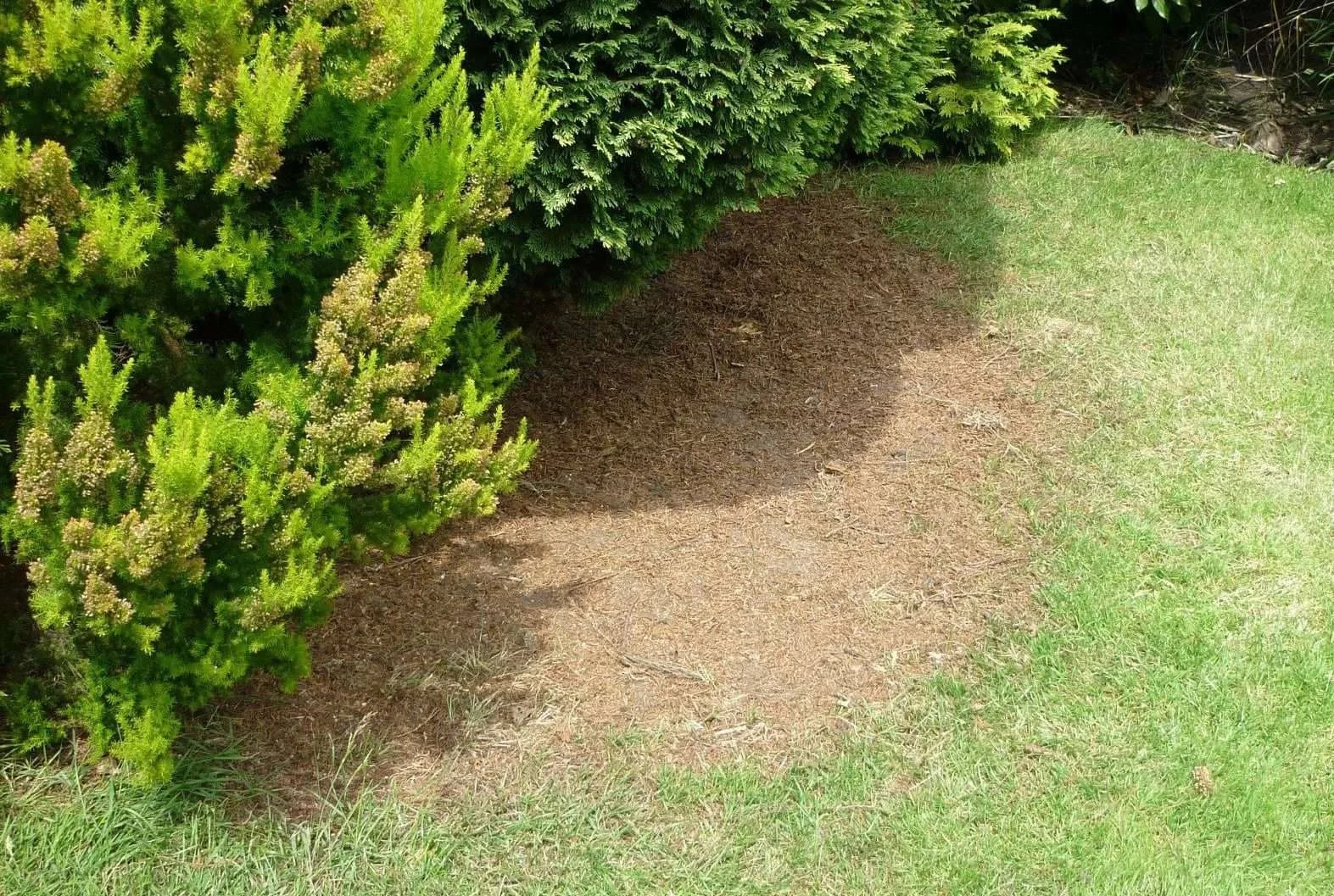
The most common mistake is sowing grass right up to the trunk of a conifer. It is better to leave the tree trunk circle free of grass and decorate it with mulch (bark, sawdust, gravel) at a distance of 30-50 cm from the trunk, depending on the size of the plant. This provides several advantages:
Beyond this tree trunk circle, you can already plan the lawn — and this is where it is important to choose the right seed mixture.
If the conifers have already grown to a significant size, part of the lawn ends up in partial shade. Look for mixtures with a high content of red fescue and meadow grass — these grasses tolerate a lack of sunlight better than ryegrass, which is demanding on lighting.
Since the area near conifers is rarely uniform in terms of light and moisture throughout the day, the optimal option is a universal mixture of lawn grass seeds that combines several species with different properties. Thanks to this, the lawn grows evenly both in sunny areas near the edge of the composition and in partial shade under the crown.
Since needles gradually acidify the topsoil, it is worth choosing grasses that are tolerant to slightly acidic reactions, or periodically liming the area near conifers to maintain a pH level comfortable for the lawn.
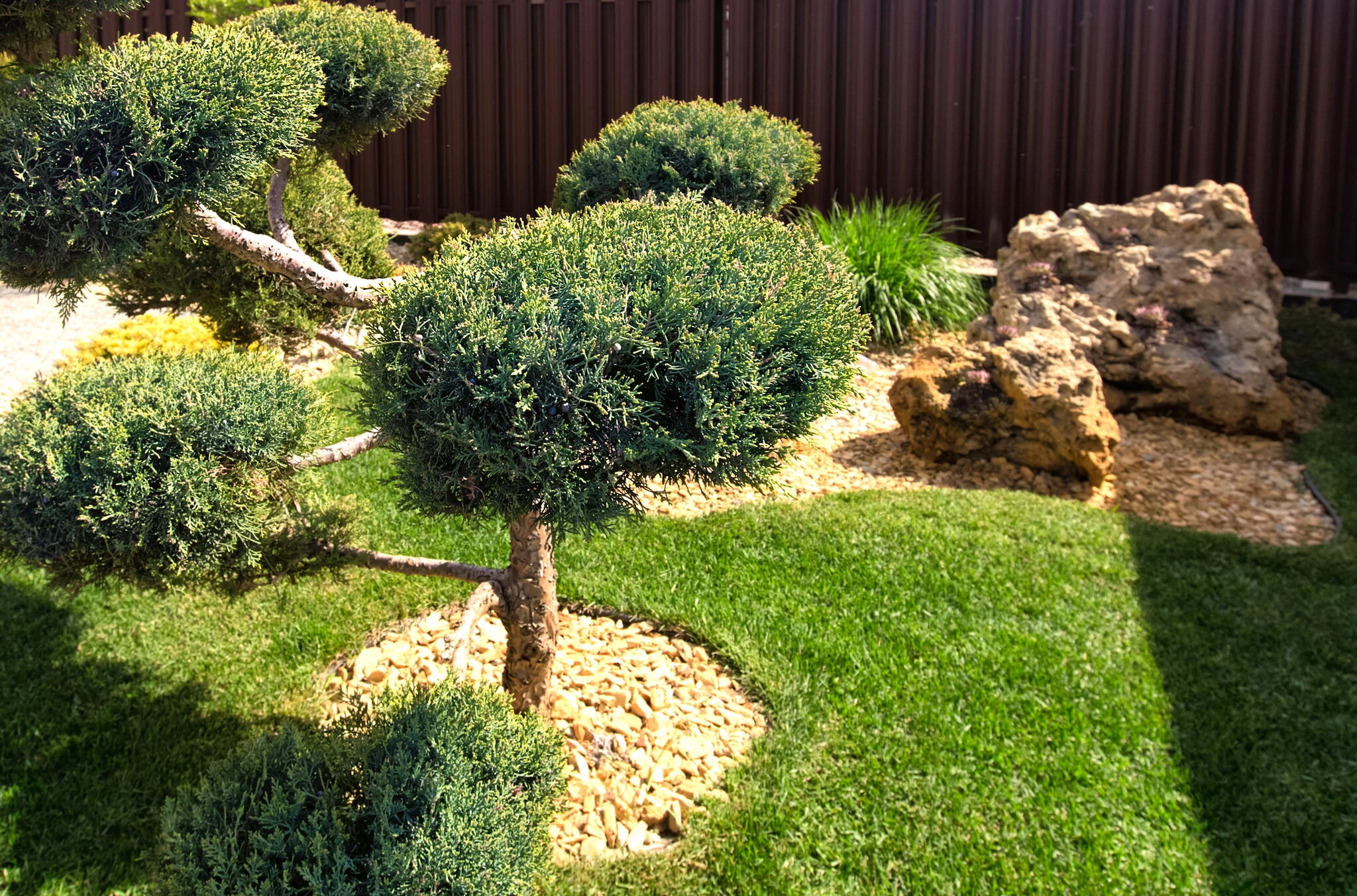
Regularly remove fallen needles. A layer of needles accumulated on the lawn blocks light from reaching the blades of grass and promotes the development of fungal diseases due to increased moisture underneath.
Feed the trunk zone and the lawn separately. Conifers require specialized fertilizers with a high content of iron and magnesium to maintain a rich green color of needles, while the lawn needs a balanced nitrogen-phosphorus-potassium complex. Mixing these fertilizers or applying them haphazardly can harm both types of plants.
Monitor watering. Conifers do not like waterlogging, while the lawn needs regular watering during dry periods. The best solution is drip irrigation for conifers and separate sprinkler irrigation for the lawn to avoid conflicting needs.
Mow carefully near the crown. Low branches of junipers and thujas can easily be damaged by a mower. Near conifers, it is better to use a trimmer line or hand shears for final edging.
Loose, well-drained soil, which is usually prepared for conifers, and freshly mulched tree trunk circles are a favorite habitat for moles. Their underground tunnels can run right under the roots of young conifers, disrupting root contact with the soil, and earthen mounds spoil the appearance of a newly designed lawn. If you notice characteristic bumps of earth on the site near the conifer composition, you should act quickly before mole tunnels spread across the entire lawn. Proven mole control products help solve the problem delicately without damaging either the conifer plantings or the freshly seeded lawn around them.
Not all conifers are equally "friendly" to a lawn next to them. If you are only planning the composition, it is worth considering several factors at the plant selection stage.
Size of the adult crown. Dwarf forms of thujas, junipers, and pines provide significantly less shade and litter than their tall relatives. For small areas where the lawn plays the main role, it is better to choose compact varieties — they leave more space for grass and sunlight.
Growth rate. Slow-growing conifers (for example, some varieties of common juniper or western thuja) maintain a moderate size for years, while fast-growing species can significantly expand the shaded area over several seasons, and the lawn that grew well in the sun in the first years will gradually begin to thin out.
Crown shape. Columnar and pyramidal forms of conifers provide less side shade than spreading globular or creeping varieties. If the main goal is to preserve as much lit area for the lawn as possible, preference should be given to vertical forms.
Location relative to the cardinal points. By planting conifers on the north side of the plot, you minimize shade on the lawn during the day. Placement on the south side, on the contrary, creates a longer shadow that falls over a larger part of the yard.
Careful planning at the start greatly facilitates subsequent maintenance — both for the conifers and for the lawn surrounding them.
Even experienced gardeners sometimes make miscalculations that over time spoil the appearance of the composition.
The lawn around conifers is not just a background for the composition, but a full-fledged landscape element that requires its own approach. A properly delineated trunk zone with mulch, a shade-tolerant and adaptive grass mixture, separate feeding for conifers and the lawn, as well as timely pest control like moles — all together give the very result for which the garden is created: a neat, well-groomed area where conifers retain their shape and color, and the lawn around them remains thick and even all year round.