

0 грн.
Checkout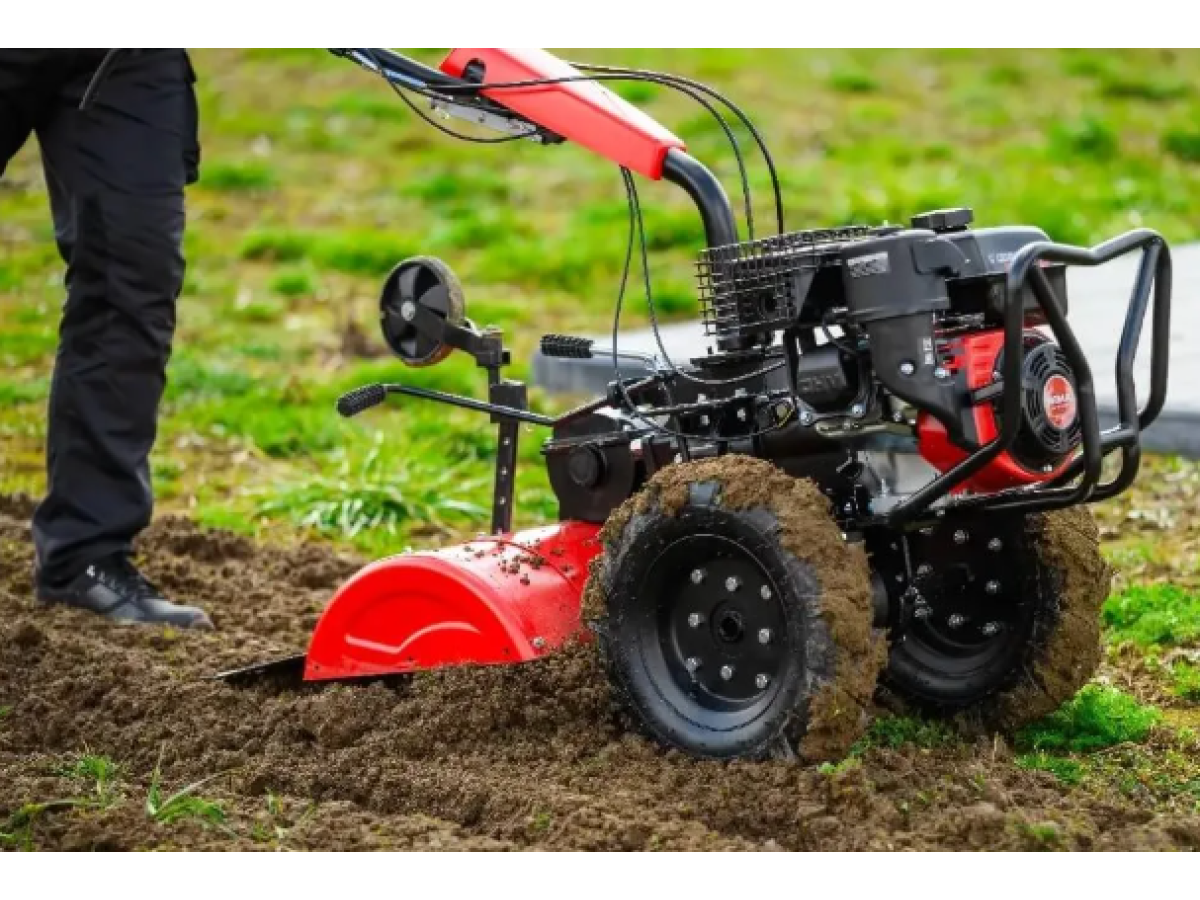
Therefore, for greenhouses and row spacing, you need compact, light, and narrow equipment to carefully pass between rows and not touch the plantings. Dimensions and working width are more important here than bare power. So before you open the catalog of motor cultivators, let's figure out what to look for when choosing.
For greenhouses and row spacing, this is characteristic number one. Working width is the strip of soil that the cultivator covers in one pass. And if in an open field the wider the better, here a narrow strip is important.
For working between beds and in greenhouses, look for models with a working width of 18-35 cm. This is enough to carefully pass through a narrow passage, weed and loosen the soil without touching neighboring plants. But wide models of 50-80 cm are for continuous cultivation of an open area; in tight spaces they cause nothing but problems.
Thus, one machine covers several tasks at once, and this is much more convenient than selecting a separate unit for each pass.
Here the greenhouse has its own important feature that is often forgotten. In an enclosed space, it is not power that matters, but exhaust.
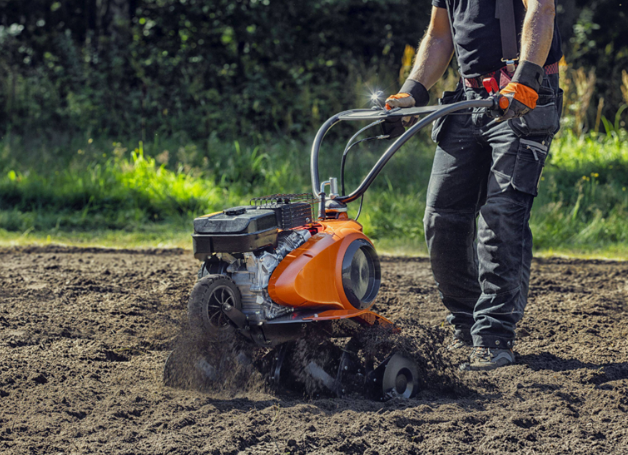
A petrol motor cultivator is more powerful and not tied to an outlet, but during operation it emits exhaust gases. In an open field, this is not a problem, but in a greenhouse, where air hardly circulates, breathing exhaust is difficult and frankly harmful. Therefore, for a closed greenhouse, a petrol one is not the best option.
An electric cultivator is much more convenient in this regard. It emits no exhaust, runs quieter, and is lighter in weight, which means it is easier to handle in tight spaces.
There is one minus – it is tied to an outlet (if not a battery model), but for a greenhouse this is a small thing, because the area is small, and the cable is usually more than enough.
There is no need to chase the maximum. The soil in a greenhouse and in well-tended beds is usually loose. It is cultivated every season, so the cultivator will not have to turn over virgin soil. That means a super-powerful motor is unnecessary.
For a greenhouse and row spacing, an electric model of 800-1500 W is quite sufficient. This is enough to loosen soft soil, prepare beds, and weed plantings. It makes sense to take something more powerful only if the soil is heavy, clayey, or dense – then you should look at more powerful models.
By the way, extra power also brings extra weight, and in the tightness of a greenhouse this only gets in the way.
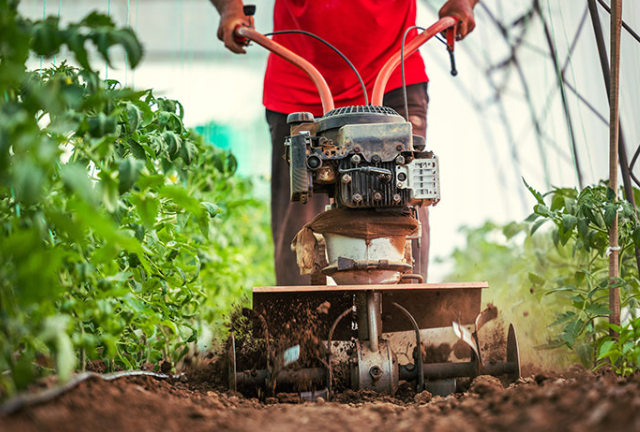
There are a few little things that are especially helpful in tight spaces. Protective discs on the sides of the cutters prevent damaging neighboring plants. Reverse helps you get out of a narrow passage without manually turning the cultivator. Low weight and adjustable handles make work easier on your back. For an electric model, a wire holder is also useful so that the cable does not get tangled underfoot.
So for greenhouses and row spacing, choose not the most powerful, but a convenient, compact, light cultivator with a narrow width and cutter protection. Then the equipment will easily pass between the beds and really make plant care easier, rather than gathering dust in the corner.